
Testosterone plays a vital role in men’s health. As men age, it’s normal for testosterone to gradually decline. However, for some, levels drop below what’s considered healthy, resulting in noticeable and often life-disrupting symptoms.
If you’re experiencing changes in your body, mood, or libido, you may have low testosterone levels. Learn the common signs, how to get help, and the treatment options you can consider.
Takeaway:
Low testosterone in men can lead to symptoms like fatigue, low libido, erectile dysfunction, muscle loss, depression, and weight gain. If you’re noticing persistent physical or emotional changes, it may be time to speak with a healthcare provider.
What is Testosterone?
Testosterone is the primary male sex hormone responsible for a range of physiological functions. Produced mainly in the testicles, it regulates:
- Libido (sex drive)
- Spermatogenesis / Sperm Production
- Skeletal Muscle Growth (stimulates protein synthesis)
- Red Blood Cell Production (erythropoiesis)
- Secondary male characteristics like male hair patterns, voice deepening, and vocal changes
- Fat Distribution
- Mood and Energy
Testosterone levels naturally decline around 1% per year after age 30, but when levels fall too low, symptoms can become significant and affect quality of life.
Causes of Low Testosterone
Low testosterone may result from various factors, including:
- Aging
- Obesity
- Diabetes or metabolic syndrome
- Obstructive/untreated sleep apnea
- Injury or infection of the testicles
- Pituitary gland disorders
- Chronic illness or medications (e.g., opioids or steroids)
- Chemotherapy or radiation treatment
- Alcohol abuse
Identifying the underlying cause is essential for determining the most effective treatment.
Signs and Symptoms of Low Testosterone
Low testosterone affects each man differently, but symptoms generally fall into three categories: sexual, physical, and emotional/cognitive.
Sexual Symptoms
These are often the first and most noticeable changes:
- Low libido – A reduced interest in sexual activity
- Erectile dysfunction – Difficulty achieving or maintaining an erection
- Reduced frequency of morning erections
- Low semen volume or fertility issues
Physical Symptoms
Low testosterone can lead to broader changes in body composition and physical health:
- Fatigue and low energy levels
- Loss of muscle mass or strength
- Increased body fat, especially in the abdomen
- Decreased bone density (osteopenia or osteoporosis)
- Hair loss, particularly on the body or face
- Hot flashes or night sweats in some men
Emotional and Cognitive Symptoms
Hormonal changes can affect mental clarity and emotional well-being:
- Depression or persistent sadness
- Irritability or mood swings
- Difficulty concentrating or memory issues (“brain fog”)
- Reduced motivation or self-confidence
If several of these symptoms persist for weeks or months, it’s worth scheduling a doctor’s appointment for evaluation.
When to See a Doctor
You should consider scheduling an in-person or online doctor visit if you notice:
- A decline in sexual performance or interest
- Fatigue that doesn’t improve with rest
- Changes in body composition
- Mood or memory changes
- Sleep problems or unexplained weight gain
How Testosterone is Diagnosed
Diagnosis for testosterone levels typically involves:
- Medical history and symptom review
- Physical exam (if in-person) or guided remote symptom assessment
- Blood tests to measure total and free testosterone levels, usually in the morning
- Additional labs for thyroid, prolactin, or pituitary function if needed
Treatment Options for Low Testosterone
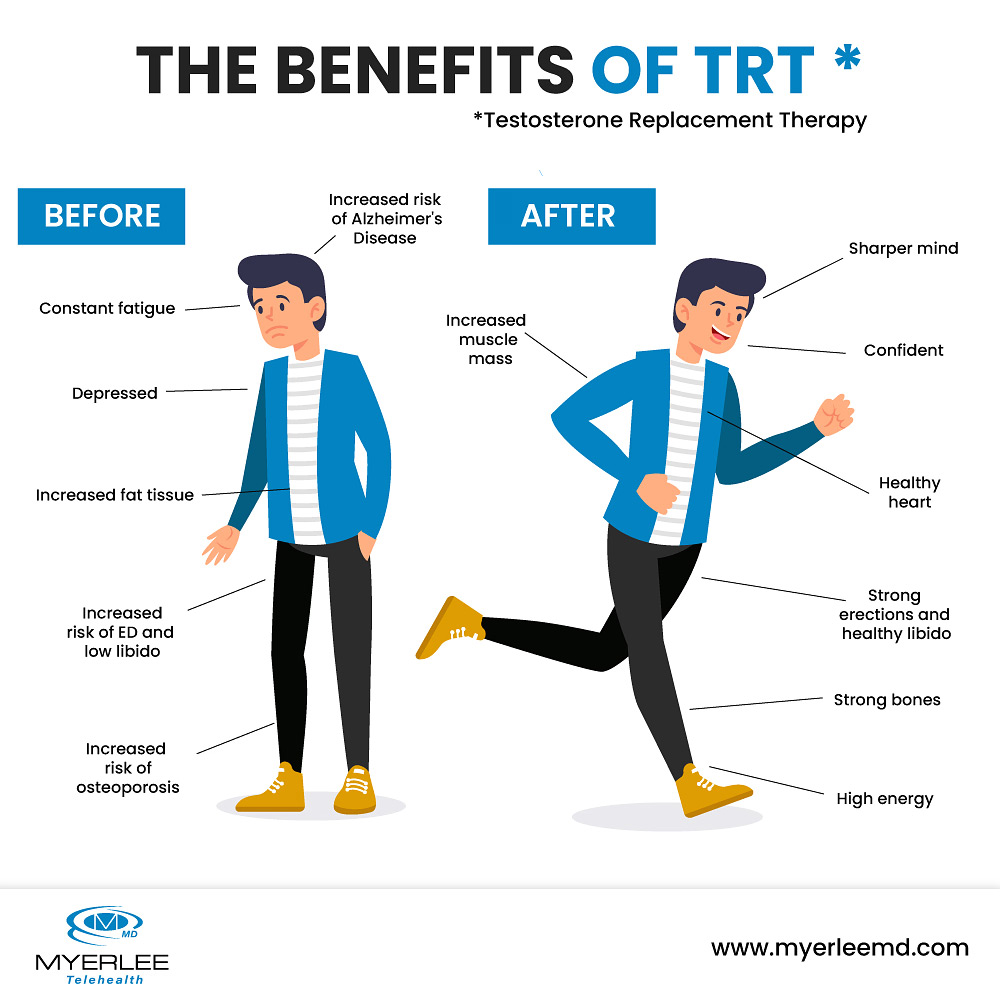
If your levels are below normal and you’re symptomatic, treatment may include testosterone replacement therapy (TRT) through:
- Injections
- Gels or creams
- Patches
- Pellets
- Sublingual tablets
The right method depends on lifestyle, symptoms, and personal preference. Treatment should always be monitored by experienced testosterone doctors to ensure safety and effectiveness.
Getting Help Through Telehealth
Low testosterone is a common but often overlooked health issue that affects men’s sexual, physical, and emotional well-being. If you’re noticing unexplained changes in energy, mood, libido, or muscle tone, don’t ignore the signs.
With platforms like MyerleeMD Telehealth, you can get started with testosterone therapy through a secure and convenient process.
- Schedule a telehealth appointment.
- Complete a virtual doctor visit to discuss symptoms.
- Undergo lab testing.
- Receive a diagnosis and treatment plan.
- Get your online testosterone prescription filled at your preferred pharmacy or delivered.
Schedule an Online Doctor Consultation Today
If you’re experiencing signs of low testosterone, don’t wait. Schedule an online doctor consultation at MyerleeMD Telehealth today. Our team will guide you through lab testing, diagnosis, and treatment. Call us at 855-MYERLEE 6937533 or register online!
References
- Bhasin S, et al. (2018). “Testosterone Therapy in Men with Hypogonadism: An Endocrine Society Clinical Practice Guideline.” J Clin Endocrinol Metab. https://academic.oup.com/jcem/article/103/5/1715/4939465
- Jia, H., Sullivan, C. T., McCoy, S. C., Yarrow, J. F., Morrow, M., & Borst, S. E. (2015). Review of health risks of low testosterone and testosterone administration. World Journal of Clinical Cases: WJCC, 3(4), 338. https://pmc.ncbi.nlm.nih.gov/articles/PMC4391003/
- Nassar, G. N., & Leslie, S. W. (2023). Physiology, testosterone. https://www.ncbi.nlm.nih.gov/books/NBK526128/
- Traish, A. M. (2014). Testosterone and weight loss: the evidence. Current Opinion in Endocrinology, Diabetes and Obesity, 21(5), 313-322. https://journals.lww.com/co-endocrinology/fulltext/2014/10000/Testosterone_and_weight_loss__the_evidence.2.aspx
- Wu FCW, et al. (2010). “Identification of late-onset hypogonadism in middle-aged and elderly men.” New England Journal of Medicine. https://www.nejm.org/doi/full/10.1056/NEJMoa0911101