

Allergic rhinitis, commonly known as hay fever, is a widespread condition that affects both children and adults. It occurs when the immune system reacts to substances in the environment that are usually harmless to others, known as allergens. Although allergic rhinitis isn’t dangerous, it can cause persistent symptoms that interfere with sleep, work, and quality of life.
Takeaway
Acid reflux is caused by stomach acid flowing back into the esophagus. Signs include heartburn, regurgitation, chest pain, difficulty swallowing, chronic cough, and sore throat. Persistent symptoms require medical evaluation. Telehealth allows easy access to licensed providers for diagnosis, treatment, and follow-up care.
What Triggers Allergic Rhinitis?
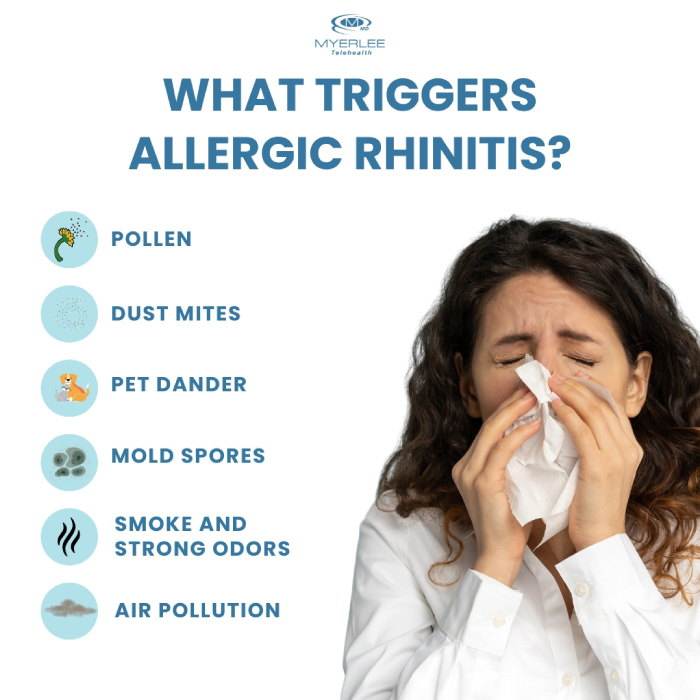
Allergic rhinitis is triggered when your body comes into contact with allergens and mistakenly identifies them as threats. In response, your immune system releases histamines and other chemicals that cause inflammation and allergy symptoms.
Common triggers include:
- Pollen: From trees, grasses, and weeds, especially during spring and fall
- Dust mites: Microscopic organisms that thrive in bedding, upholstery, and carpets
- Pet dander: Proteins found in the skin, saliva, and urine of furry animals
- Mold spores: Found in damp environments like bathrooms and basements
- Smoke and strong odors: Such as cigarette smoke, perfumes, and cleaning products
- Air pollution: Including smog, vehicle exhaust, and chemical fumes
Each person’s triggers can vary, and symptoms may be seasonal or year-round, depending on the allergens involved.
Management and Treatment
Managing allergic rhinitis involves both preventing exposure to allergens and alleviating symptoms through medications or other interventions.
- Sneezing
- Runny or blocked nose
- Itchy or watery eyes
- Postnasal drip
- Coughing
- Itchy throat or ears
- Headaches or facial pressure
- Fatigue, often due to disrupted sleep
Management and Treatment
Managing allergic rhinitis involves both preventing exposure to allergens and alleviating symptoms through medications or other interventions.
1. Avoidance Strategies
- Monitor pollen forecasts and stay indoors during high pollen times
- Use HEPA filters in your home and vacuum regularly
- Wash bedding in hot water weekly
- Keep windows closed during allergy seasons
- Bathe pets regularly and keep them out of bedrooms
2. Medications
- Antihistamines: Help relieve sneezing, itching, and a runny nose
- Nasal corticosteroids: Reduce inflammation and nasal congestion
- Decongestants: Offer short-term relief of a stuffy nose
- Eye drops and saline sprays: Soothe irritated eyes and flush out allergens
- Leukotriene receptor antagonists: Target inflammation caused by allergens
3. Immunotherapy
This long-term treatment involves exposing the body to gradually increasing doses of allergens through shots or sublingual tablets. It can help reduce the body’s sensitivity and provide lasting relief.
4. Lifestyle Support
- Stay hydrated
- Use air purifiers
- Maintain clean, allergen-free living spaces
- Wear masks when gardening or cleaning dusty areas
Convenient Care for Allergic Rhinitis at Myerlee MD
At Myerlee MD, we put you first. Our approach is simple: We Listen First, Treat Second. Every patient receives a customized care plan tailored to their specific health concerns and lifestyle.
Whether your symptoms are seasonal or persistent, our provider team is here to help through:
- 1-on-1 Video Telehealth Visits: Receive expert care without leaving your home, no waiting rooms or commute.
- Professional, Affordable Care: Access high-quality medical services with no insurance required. We believe healthcare should be effective, personal, and accessible.
Start Your Online Consultation Today
Embrace a life of vitality and balance. Start your journey today by scheduling your online consultation. Our team is ready to provide you with the care and support you need to thrive.
- Step 1: Medical Forms
- Step 2: Online Visit
- Step 3: Receive Medicine